

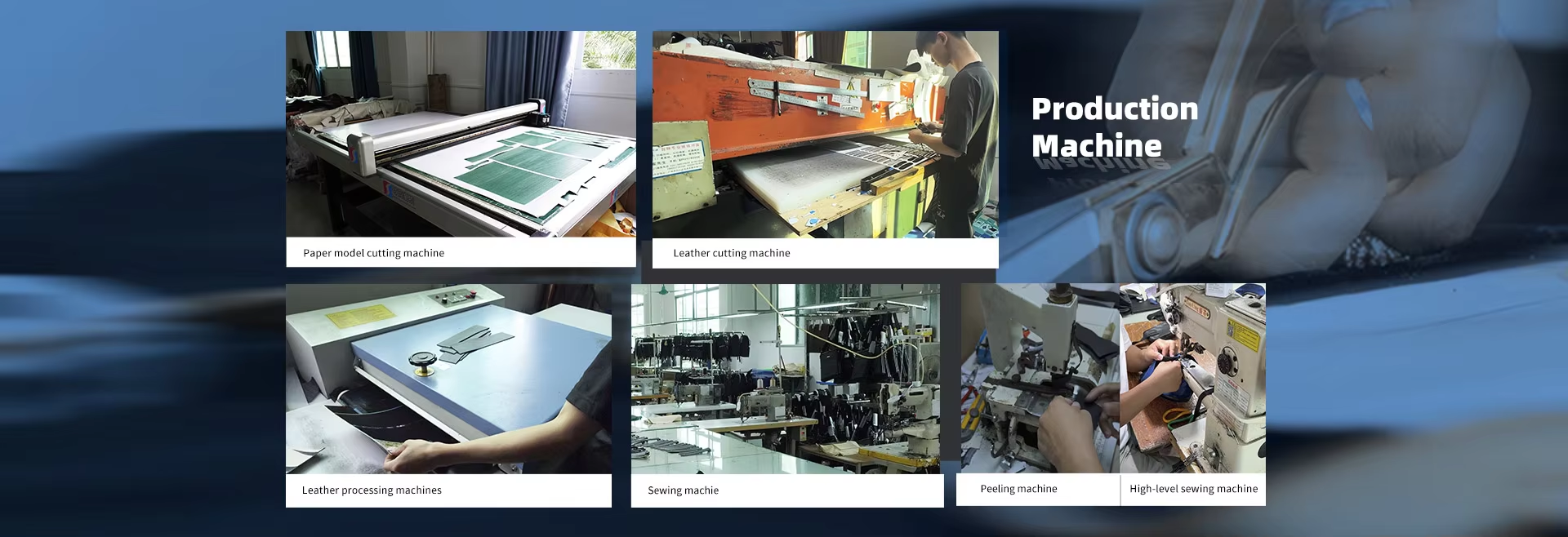
I. Design and Cutting Stage
Laser Cutting Machine/Computerized Cutting Table:
Essential for high-end/mass production. By importing design drawings via computer, it can cut leather with extreme precision and efficiency, resulting in a slightly charred edge (due to the laser), good consistency, and suitability for complex patterns and mass production.
II. Leather Processing and Shaping Stage
Skiving Machine:
Used to thin the edges of the leather so that the seams are not too thick when joined, resulting in a flatter and more aesthetically pleasing finished product. Manual operation can be done with a manual skiving knife, but this requires high skill.
Embossing Machine/Hot Stamping Machine:
Used to emboss logos, patterns, or special textures onto the leather. If the user requires the “internal logo patch” mentioned earlier, a hot stamping machine or heat transfer machine is usually used for processing.
Edge Creasing Machine:
Used to press decorative lines (also known as “decorative grooves”) onto the edges of the leather, making the bag look more refined. This can be done manually using a heated edge creaser.
Shaping Machine/Vacuum Forming Machine:
Used to create parts with three-dimensional curves or fixed shapes (such as the sides and bottom of some handbags), shaping the leather through heating and vacuum forming.
III. Sewing and Assembly Stage
Industrial Sewing Machine (Core Equipment):
High-head sewing machine/Flatbed sewing machine: The most basic sewing machine, used for most seams.
Cylinder arm sewing machine: Specifically used for sewing the three-dimensional parts and hard-to-reach corners of bags, such as the already sewn bag body and handles, side panels, etc.
Heavy-duty synchronized sewing machine: Designed for multiple layers of thick leather (such as backpack straps, belt interfaces), with strong feeding power to ensure even stitching.
Specialized machines: Such as double-needle machines (for sewing parallel double lines), embroidery machines (used for the “embroidery” development mentioned by the user, allowing direct embroidery of patterns on leather).
Punching Machine:
Used to punch holes in handles, straps, etc., for installing snap fasteners, screws, and other hardware. Manual tools include a round punch and a hammer.
IV. Edge and Detail Finishing Stage
Edge Skiving Machine:
Used to round the sharp edges of the cut leather, facilitating subsequent sanding and edge sealing. Sanding/Edge Finishing Machine:
Used for sanding, applying edge finishing liquid, and polishing leather edges to make them smooth and shiny. This can be done manually using sandpaper, edge finishing liquid, and a polishing stick.
Computerized Sewing Machine (Automated Sewing Unit):
The core of factory automation. Programmable to automatically complete complex sewing patterns, such as logo embroidery and decorative stitching, greatly improving consistency.
V. Hardware Installation Process
Hardware Stamping/Riveting Machine:
Used to securely install metal accessories such as rivets, snaps, studs, and locks. For small-scale production, a manual hardware installation tool kit (hammer, base mold) can be used.