

This is a very practical commercial question. In short: The core difference lies in the “base material” (substrate) and performance, with “water-based” being the shared eco-friendly process; the price difference mainly stems from the complex and expensive manufacturing process of the microfiber substrate.
Below is a clear comparison and analysis from both the difference and price perspectives.
I. Core Differences at a Glance (Technical Perspective)
| Aspect | Water-Based PU Leather | Water-Based Microfiber Leather |
|---|---|---|
| Essential Structure | Coated Fabric. A water-based PU paste is coated onto a common base fabric (e.g., knitted fabric) to form a leather-like film. | High-Performance Composite. A microfiber non-woven fabric (simulating leather structure) is impregnated and filled with water-based PU, then surface-finished. |
| Key Analogy | “Painting a Wall.” The performance and appearance of the paint (PU coating) are key. | “Reinforced Concrete.” The rebar (microfiber network) provides skeletal strength, the concrete (water-based PU) fills and reinforces; they work together. |
| Performance Core | Dependent on Coating. Feel, abrasion resistance, and peel strength rely mainly on the coating formula and process. | Dependent on Substrate. The microfiber non-woven itself provides excellent mechanical properties, breathability/moisture permeability foundation, and a “fleshy” feel. |
| Hand Feel & Texture | Can mimic various grains, but tends to feel plasticky, stiff, lacking the fullness and resilience of real leather. | Extremely close to high-quality real leather – soft, full, elastic, with a warm, supple hand feel. |
| Physical Properties | Average. Prone to cracking, peeling, hardening with long-term use. Poor breathability. | Excellent. High abrasion, tear, and peel resistance. Outstanding durability. Offers some breathability. |
| Primary Applications | Fashion bags/accessories, furniture upholstery, garment trims, lightweight shoe materials – areas prioritizing appearance, eco-friendliness, and medium durability requirements. | High-end footwear (especially sports shoes), automotive interiors, premium sofas/functional chairs, quality luggage – areas with stringent demands for abrasion resistance, durability, and hand feel. |
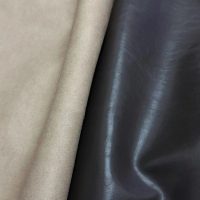
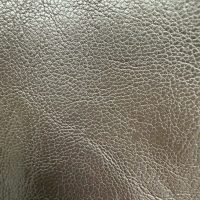
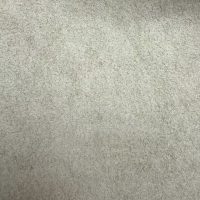
Water-Based PU Leather
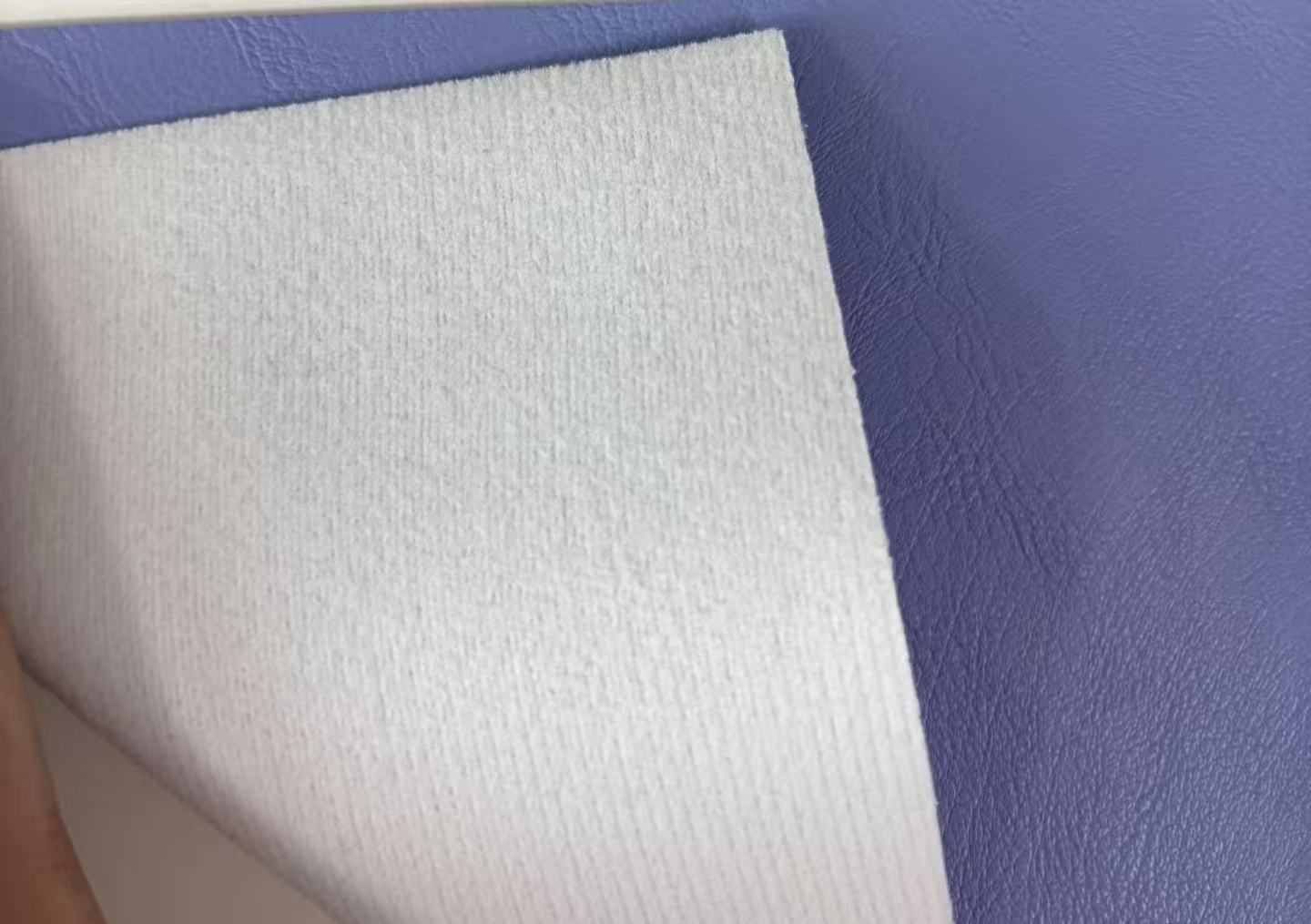
Water-Based Microfiber Le
II. Detailed Price Difference Analysis (Commercial Perspective)
The price difference is significant. Generally, water-based microfiber leather costs 3 to 10 times or more than water-based PU leather. The reasons are broken down below:
1. Cost Composition Analysis
- Why Water-Based PU Leather is Low Cost:
- Low substrate cost: Using ordinary base fabrics, such as knitted or woven fabrics, the price is very low.
- Simple process flow: Mainly includes coating, drying, and embossing processes. The process is short, energy consumption is relatively low, and output is high.
- Low material cost: Although water-based polyurethane resin is slightly more expensive than solvent-based resin, the overall material cost is controllable.
- Why Water-Based Microfiber Leather is High Cost:
- Expensive Substrate (Main Reason): Producing microfiber non-woven fabric is a high-tech, capital-intensive process.
- Fiber Material: Requires ultUltrafine denier fibers (<0.001 denier, hundreds of times finer than a human hair) are expensive.
- The manufacturing process is complex, involving multiple intricate steps such as island-island fiber spinning, nonwoven needle punching, impregnation, and reduction (dissolving the “sea” components to leave the ultrafine “island” fibers). This results in time-consuming and energy-intensive processes, and makes yield control difficult.
- More Process Steps: Beyond substrate manufacturing, it requires highly penetrative water-based PU impregnation, filling, coagulation, washing, drying, etc., to fully integrate PU into the 3D microfiber network.
- High Performance Requirements: End applications (e.g., automotive, premium sports) demand extremely strict physical property standards, leading to high production and quality control costs.
- Expensive Substrate (Main Reason): Producing microfiber non-woven fabric is a high-tech, capital-intensive process.
2. Reference Market Price Range
- Water-Based PU Leather: Typically in the range of $1.5 – $4.5 USD per meter (for a ~1.4m width). Very basic or promotional types may be under $1.5/m, while high-end custom varieties may approach $6/m.
- *Note: Based on approximate conversion from the original CNY 10-30/米 range, using a rough rate of 1 USD = 6.5 CNY for estimation.*
- Water-Based Microfiber Leather: Typically in the range of $6 – $15+ USD per meter, and often higher. High-grade microfiber specified for automotive interiors or top sportswear brands can easily exceed $15/m, even reaching hundreds per meter.
- *Note: Based on approximate conversion from the original CNY 40-100+/meter range.*
Simple Analogy: Water-based PU leather is like an “economy-class eco-friendly coated leather,” while water-based microfiber leather is a “high-performance eco-friendly genuine leather alternative material.”
III. How to Choose? – A Decision Chart
When choosing between the two, your decision should be based on product positioning and core needs:
Flowchart Concept:
[Start: Selecting Eco-Friendly Synthetic Leather]
What are the core requirements for the product?
–> If “Priority: Compliance with environmental certifications (e.g., free of volatile organic compounds)” –> Select water-based PU leather –> Applications: Budget bags, furniture fabrics, clothing accessories.
–> If “Priority: Superior performance and feel (abrasion resistance/breathability/genuine leather feel)” –> Select water-based microfiber leather –> Applications: High-end footwear, automotive interiors, professional equipment.
Advice for Purchasers or Product Developers:
- Define Requirements Clearly: Look beyond just “water-based” and “leather.” Ask: How much wear and tear will the product endure? Is the consumer most concerned about feel, the eco-label, or longevity? What’s the budget ceiling?
- Request Physical Samples and Spec Sheets: Always get physical swatches for bending, touching, and even simple scratch tests. Ask suppliers for key test reports on peel strength, abrasion resistance (Martindale), breathability, etc.
- Calculate Total Cost of Ownership: For long-use products (e.g., sofas, car seats), while microfiber leather has a higher unit price, its longer lifespan may reduce the “cost per year of use,” making it more economical overall.
- Use Precise Terminology: When communicating with suppliers, using “Water-Based PU Synthetic Leather” and “Water-Based Microfiber Synthetic Leather” avoids ambiguity. The term “leather” is often used in marketing, but in the industry, “synthetic leather” or “artificial leather” are more accurate technical terms.
Summary:
Water-Based PU Leather is the “eco-friendly entry ticket,” achieving green production at an acceptable cost.
Water-Based Microfiber Leather is the “premium performance experience ticket,” paying a premium on top of eco-friendliness for top-tier durability and feel, making it the most powerful genuine leather alternative. Your choice essentially decides whether you’re paying for the product’s “eco-story” or its “quality story.”