


This is a very common question. Although both full-grain leather and split leather originate from cowhide, there is a world of difference in their quality, durability, and price. Below is a detailed explanation.
1. Full-Grain Leather vs. Split Leather: Key Differences
To understand the difference, you first need to understand the cross-sectional structure of cowhide. A raw hide can be horizontally split into one or more layers, much like cutting a cake. The top layer is the full-grain leather.
| Characteristic | Full-Grain Leather | Split Leather |
|---|---|---|
| Source | The outermost layer of the cowhide, the original grain layer. | The remaining corium or fibrous layer after the full-grain layer has been split away. |
| Structure | Tight, intact, retains the hide’s natural grain surface. | Loose, fibrous, lacks a complete natural grain surface. |
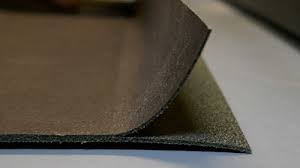
| Surface | Has natural, irregular grain patterns and pores. Feel is smooth, fine, and elastic. | Has no natural finish; a layer of PU (polyurethane) or PVC film must be applied to the surface to create a usable leather. |
| Breathability | Excellent. Retains natural pores, allowing it to breathe like human skin. | Poor or almost none. The chemical coating on the surface blocks air circulation. |
| Durability | Very high. Tight fiber structure becomes more lustrous with use and has a long lifespan. | Poorer. The surface coating is prone to wear, cracking, and peeling, resulting in a limited service life. |
| Appearance | Natural texture, soft luster. Develops a unique patina and character with use. | Texture is uniform, stiff, and repetitive (machine-embossed). Looks “too perfect” and lacks natural character. |
| Common Names | Full-grain leather, top-grain leather, pure leather. | Split leather, coated leather, PU leather (Note: Sellers often vaguely call it “genuine leather”). |
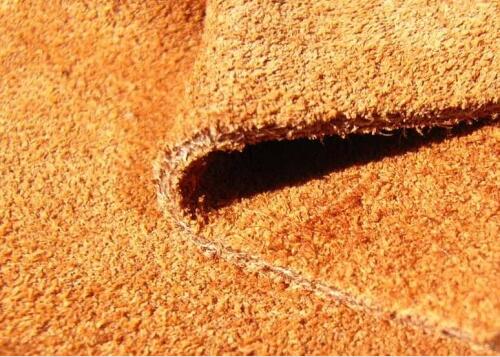
Split Leather
2. How to Tell the Difference Simply?
- Look at the Grain: Full-grain leather has a natural, irregular grain that varies in density across different areas. Split leather has a very uniform, repeating grain pattern.
- Press the Surface: Press a finger onto full-grain leather, and fine, skin-like wrinkles will appear around the spot. Pressing split leather will show few wrinkles, or they will be very uniform, because the PU/PVC surface is rigid.
- Smell it: Full-grain leather has a rich, earthy leather smell. Split leather often has more of a chemical odor.
- Feel the Texture: Full-grain leather feels supple, pliable, and elastic. Split leather can feel drier, stiffer, or plasticky.
- Look at the Back: The back of full-grain leather is nappy and fibrous. The back of split leather is also fibrous but is often covered with a fabric backing for aesthetics.
3. Price Difference
The price difference is significant, primarily determined by raw material cost, craftsmanship, and durability.
- Full-Grain Leather:
- High price. Because one whole hide yields only one full-grain layer, making it scarce.
- The manufacturing process is complex, aiming to preserve its natural qualities.
- Typically 2 to 5 times more expensive, or even higher, than split leather, depending on grade (e.g., full-grain, corrected-grain), origin, and brand.
- Split Leather:
- Low price. Multiple splits can be made from one hide, resulting in high raw material utilization and low cost.
- Although the coating process incurs costs, it is overall much cheaper than processing full-grain leather.
- It is an economical alternative to “real leather.”
Simple Analogy:
Full-grain leather is like a “whole, prime cut of steak” – you’re enjoying the meat’s original quality and flavor.
Split leather is like a “reformed steak” – made from compressed meat pieces. It’s still beef, but the texture and value are entirely different.
4. Purchasing Advice
- For Quality, Durability, and Experience:
- If you want a leather product (like a high-end sofa, shoes, or bag) that will last for many years and develop character, definitely choose full-grain leather. Its breathability (crucial for sofas and shoes), durability, and sense of value are unmatched by split leather.
- For Limited Budget and Focus on Style:
- If you just like the look of leather, have a limited budget, and don’t expect the item to last a decade, then split leather is an option. Many fast-fashion leather goods use split leather.
- Important Tip: When buying, be sure to ask specifically for “full-grain leather” or “top-grain leather.” If the seller only vaguely says “genuine leather,” it’s highly likely to be split leather. Ensure the product label or description explicitly states “Full-Grain Leather”.
In summary: Full-grain leather is the ‘leather’ itself, while split leather is a ‘product made from leather.’ Whenever the budget allows, full-grain leather is always the superior choice.